Waldorf, Maryland
Basement Waterproofing Tie In in Waldorf, MD
Basement Waterproofing Tie In in Waldorf, Maryland, laid out to IRC R310, permitted, and drained properly before the well is backfilled.
Waldorf, Maryland
Basement Waterproofing Tie In in Waldorf, Maryland, laid out to IRC R310, permitted, and drained properly before the well is backfilled.
The saw cut itself took half a day. The hour that decides whether your basement stays dry for the next thirty years comes after it, when the new opening gets sealed and its drain connected to something real. A basement waterproofing tie in is that work: the membrane, flashing, and drainage details that join a fresh egress opening to the waterproofing your foundation already has.
We are Waldorf Egress Window Company, licensed and bonded under MHIC license 155221, and veteran friendly. Every opening we cut gets its tie in built before backfill, because an unsealed penetration in Charles County clay is not a possible leak someday. Left alone, it is a scheduled one.
Your foundation keeps water out as a system, not a single product: the wall, the membrane on its outside face, the drain line at the footing, and the grading that pushes surface water away. Slicing an egress opening through that wall interrupts every layer at once, and each has to be rejoined around the new window or it becomes the path water follows.
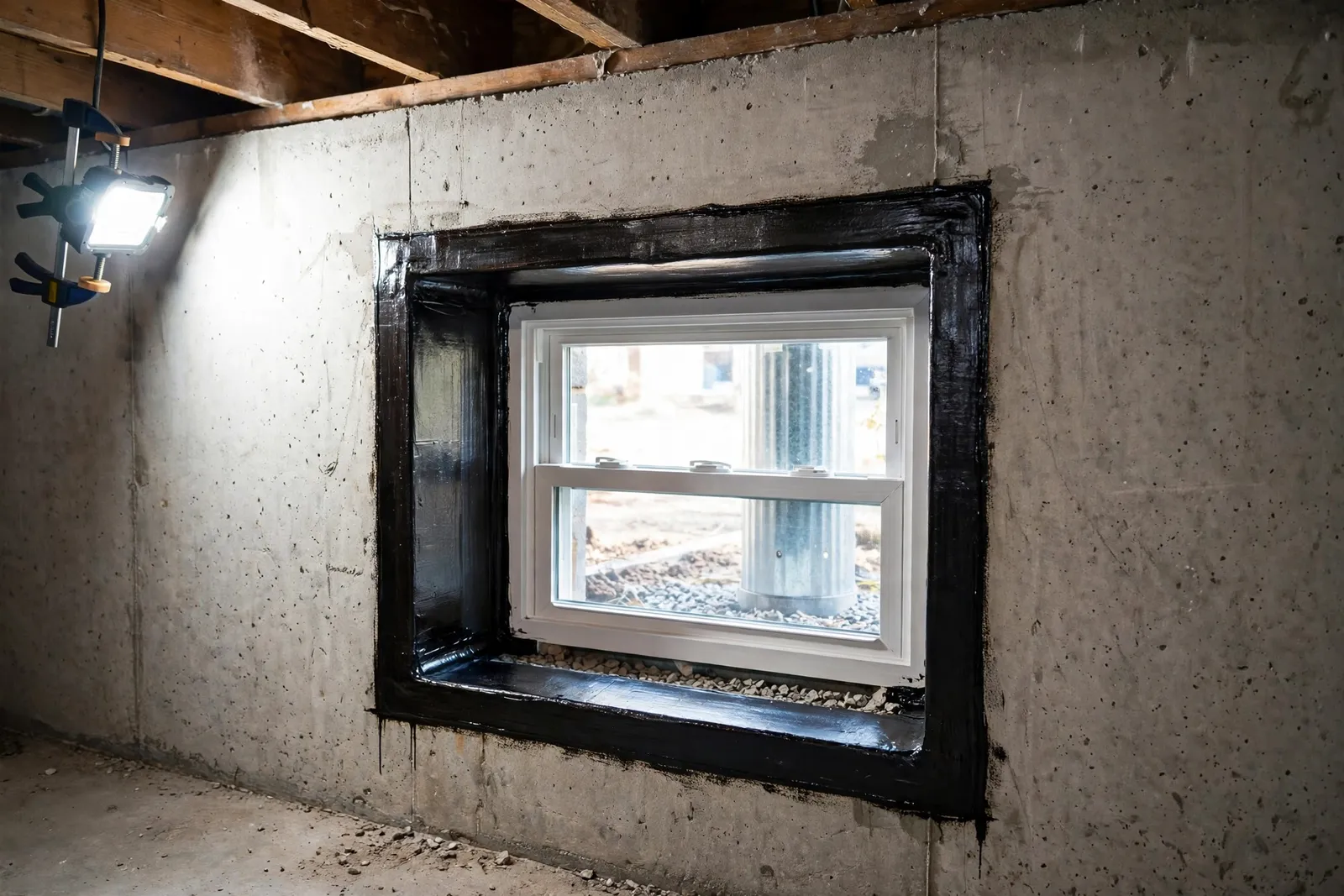
The tie in starts on the exterior face. We lap membrane flashing into the existing waterproofing in shingle fashion, so water running down the wall passes over the seam instead of behind it. The frame is sealed with below grade rated sealant, and the well side gets the same treatment, because the well is where water stands longest after a storm. The drain is the second half: the well sits on a compacted gravel bed, its line routes into the footing drain or the sump, and we test that connection before backfill. A well that cannot empty holds water against the new window, and no sealant wins that fight forever.
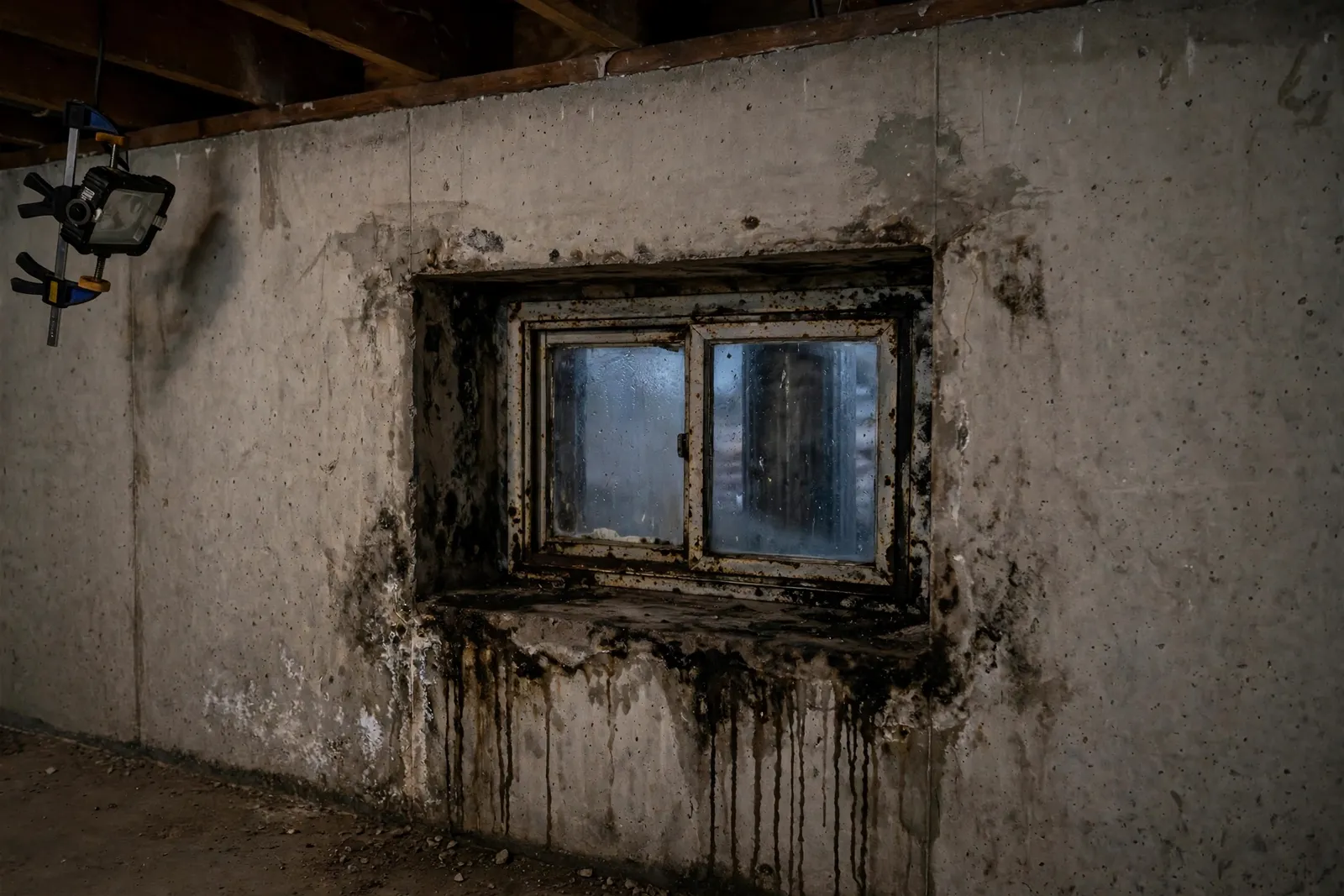
A Bannister home with a finished basement bedroom needed a legal escape opening where only a small vent window existed. We cut the opening through the poured wall, lapped membrane flashing into the existing exterior waterproofing, set a galvanized well on a deep gravel bed, and ran its drain into the sump line, confirming flow with a hose test before backfilling in lifts.
On a new installation, the tie in is not an extra line item. It sits inside the complete egress window installation range of $3,500 to $6,500 per window, covering the cut, excavation, unit, well, drainage, permit, and both inspections. Charles County permit fees typically run $150 to $500 depending on valuation.
The question also comes up on older work, where a well was set years ago with no drain at all. Correcting that means rebuilding the gravel bed and clearing or replacing the drain line, generally $800 to $2,000. Standalone well installation runs $700 to $2,500 depending on depth and material.
We expose enough of the wall face around the cut to work on clean, sound material. Flashing goes on in laps that shed water downward, edges are rolled and sealed, and the frame is caulked outside before the window is set. Inside, the frame joint is sealed as a second line of defense, never the only one.
Then comes the part nobody sees once the yard is restored. The drain line is laid to fall toward its connection, and we run water through the well to watch it leave. Only after that test does backfill start, in compacted lifts, so the ground beside the well does not settle into a basin funneling roof water back to the window.
Because the opening is a new hole through a wall that kept water out as one continuous surface. The cut breaks the wall, its coating, and the soil beside it at once. The tie in rebuilds each layer around the window, so the finished opening defends the basement the way the uncut wall did.
Into the system that handles the rest of your foundation water: the footing drain or the sump pit and pump. We confirm the connection flows before backfilling, because a drain line that ends in packed clay is decoration, not drainage.
Usually, yes. A flooding well is almost always a drainage problem, not a window problem. Rebuilding the gravel bed and clearing or replacing the drain line generally runs $800 to $2,000, and the window unit often stays exactly where it is.
No. The sealing and drainage work happens inside the normal installation sequence, two to three working days on site once the permit clears. The only schedule it adds is the few minutes spent flood testing the drain, which we are not willing to skip.
Damp staining on the wall beside the window, white mineral crust on the foundation, a musty smell that sharpens after rain, and well soil still wet days after a storm. Any of those means water is finding the seam, and the earlier it is resealed, the smaller the repair stays.
Whichever your house relies on and whichever tests as flowing. Many Waldorf homes have a sump system easy to reach from the well; others drain best into the footing line. We check both on the visit and connect to the one that actually moves water.
Tell us about your basement and the room you want to make legal. We read every request that comes in and respond with the next steps, starting with a site visit, real measurements, and the R310 math worked for your exact opening.
Licensed and bonded · MHIC license 155221 · Veteran friendly. Prefer to talk it through first? Send the form and we will call you back at the number you give us.